

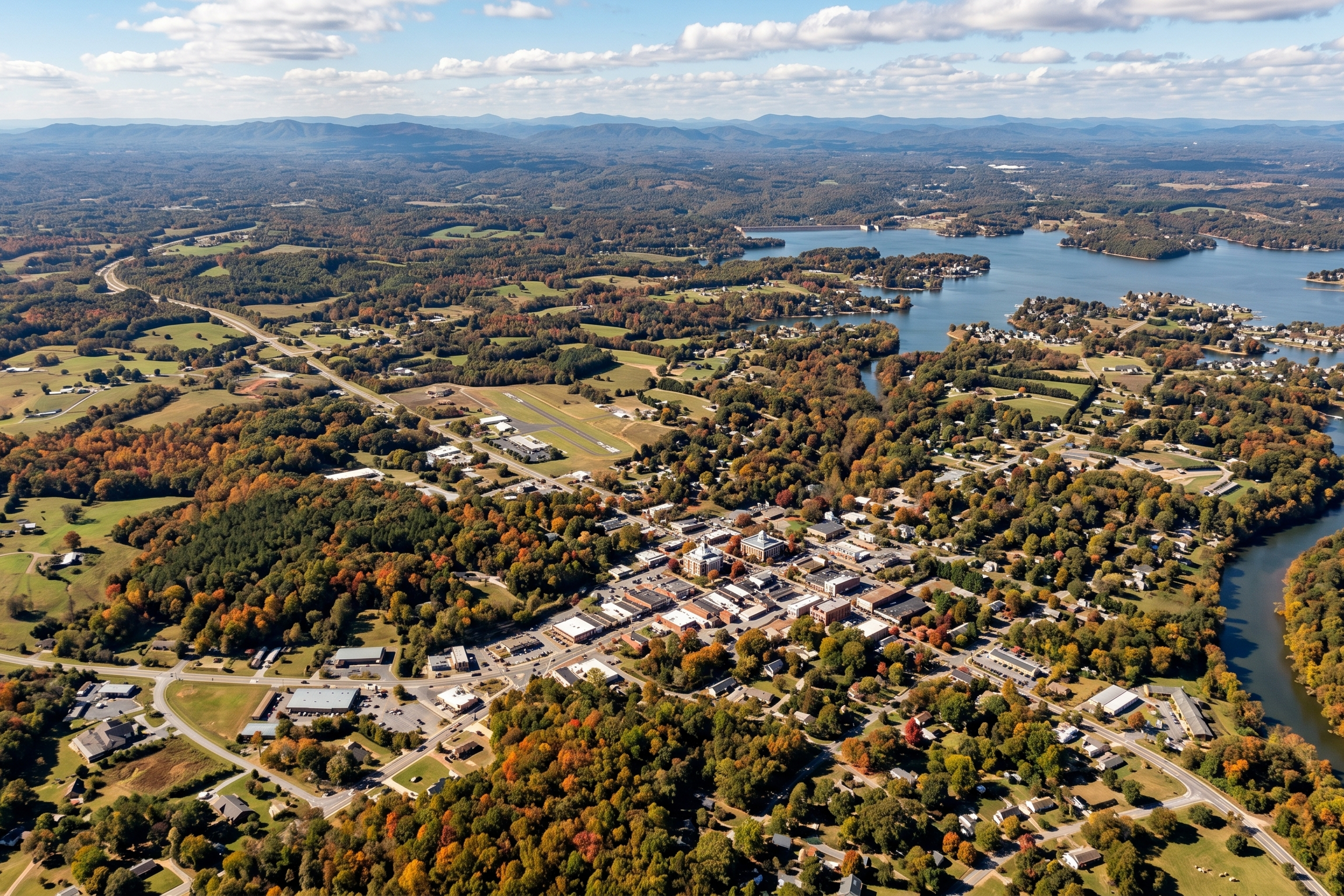
Buying a home in Lincoln County means choosing between places that look similar on a map and feel nothing alike in person. The county stretches from Lake Norman shoreline in the east to open farmland in the west, and the housing stock changes considerably along the way. A buyer searching countywide sees listings that range from historic homes near a downtown square to new construction on a cul-de-sac to acreage with a barn, which is why narrowing by town before browsing saves a great deal of time. Starting with the buyer resources and a clear sense of what each area offers makes the search far more efficient.
In This Article
A Town-by-Town Look
Denver
The eastern edge of the county along Lake Norman, and the most actively developing part of Lincoln County. Housing here skews newer, with subdivision construction alongside established neighborhoods, and access toward Charlotte is the shortest in the county. Buyers looking for recent construction, community amenities, or proximity to the lake tend to begin in Denver.
Lincolnton
The county seat, with a walkable downtown and the county's most varied housing stock. You will find early twentieth century homes near the center, mid-century construction in the surrounding neighborhoods, and newer development toward the edges. Price points across Lincolnton generally run below the lakefront areas, which makes it a practical starting point for buyers who want more square footage or an older home with character.
Sherrills Ford
Along the quieter northern shoreline, where waterfront property and larger parcels are the draw. Homes here range from lake access properties to acreage set back from the water. Sherrills Ford appeals to buyers who want lake proximity without the density found closer to the busier stretches of Lake Norman.
Stanley
On the southern end near the Gaston County line, with a mix of established neighborhoods and newer construction. Stanley offers reasonable access both to the lake and toward Charlotte and Gastonia, and it frequently comes up for buyers balancing commute distance against price.
Iron Station
More rural in character, with larger lots, land parcels, and homes on acreage. Iron Station is where buyers look when they want room for outbuildings, animals, or simply distance from a neighbor's property line, while staying within reach of both Lincolnton and Denver.
Maiden, Crouse, Cherryville, and Vale
The western and northern reaches, generally the most rural part of the region, where land and small-town settings define the market. Maiden and the surrounding communities suit buyers prioritizing acreage and privacy over commute time.
Water, Septic, and What Rural Listings Actually Mean
This surprises buyers relocating from a city more than anything else in the county.
Many properties outside the towns are served by a private well and septic system rather than municipal water and sewer. Neither is a problem, but both change the inspection process and the ongoing responsibilities of ownership. A well should be tested for water quality and yield. A septic system should be inspected, and the county health department maintains records including the permitted number of bedrooms, which matters because a septic permit rated for three bedrooms limits what the property can legally be.
Buyers planning to add on later should verify what the septic system supports before closing rather than after. Expanding a home beyond its septic permit is a considerably larger project than most people expect.
How Due Diligence Works in North Carolina
North Carolina handles contracts differently than most states, and out-of-state buyers routinely misunderstand it.
Rather than a series of contingencies, North Carolina uses a due diligence period. During that window, the buyer can inspect, appraise, arrange financing, investigate the property, and terminate for any reason or no reason at all. It is a genuinely broad right.
What makes it distinctive is the due diligence fee, paid directly to the seller and generally non-refundable if the buyer walks away, even though the buyer is entitled to walk. Earnest money is separate and is typically returned if the buyer terminates within the due diligence period. Both amounts are negotiated, and in competitive situations the fee and the length of the window become part of how offers compete.
For a rural property, that window has to cover more ground than it would in a subdivision. Well testing, septic inspection, survey questions, easement and access verification, and confirming what the land is zoned for all take time, and the window should be negotiated with that work in mind.
Land, Access, and Zoning
Acreage listings raise questions that suburban listings do not.
- Road access. Confirm whether access is by public road, a recorded easement, or a shared private drive, and who is responsible for maintaining it.
- Survey. Older rural parcels sometimes have boundaries that do not match what is on the ground or where a fence sits.
- Zoning and use. If you intend to keep animals, run a business, build a shop, or subdivide later, verify what the zoning allows before making an offer.
- Utilities. Availability of power, internet, and natural gas varies considerably across the county's rural areas.
- Floodplain. Relevant near creeks and along parts of the lake, and it affects both insurance and what can be built.
Commute and Access
Most buyers moving into Lincoln County are weighing distance against price, and the two trade off predictably. The eastern side of the county sits closest to Charlotte, and travel times increase as you move west. Southern parts of the county offer reasonable access toward Gastonia and the I-85 corridor.
Drive the route at the hour you would actually be driving it before committing. A trip that takes twenty-five minutes on a Saturday afternoon is a different trip at seven on a Tuesday morning, and that difference has changed a lot of buyers' minds about where to look.
New Construction and Established Homes
Both are available across the county, and each carries different considerations.

New construction offers current systems and materials, builder warranties, and fewer immediate repairs, though buyers should understand that a builder's representative works for the builder. Having your own representation during a new construction purchase is worth arranging before visiting a model home, since some builders limit agent registration after a first visit.
Established homes offer mature lots, settled neighborhoods, and often more square footage for the money, alongside the maintenance realities of older systems. In Lincolnton in particular, the older housing stock rewards a careful inspection and an eye toward what has already been updated.
How to Start Buying a Home in Lincoln County
- Get pre-approved before touring, since it defines your range and strengthens an offer.
- Narrow to two or three towns rather than searching the whole county.
- Decide early whether well and septic are acceptable, since that single answer eliminates or opens a large share of listings.
- Drive your commute at a realistic hour.
- Review current listings to calibrate what your range actually buys in each area.
- Arrange representation before touring new construction or making an offer.
Key Takeaways
- Lincoln County's towns differ substantially in housing stock, lot size, and access, so narrow by town before browsing.
- Denver and the eastern edge sit closest to Charlotte, while the western communities offer more land.
- Lincolnton has the most varied housing stock and generally lower price points than the lakefront areas.
- Well and septic are common outside town limits and change the inspection process.
- A septic permit limits the number of bedrooms a property can support, which matters if you plan to expand.
- North Carolina's due diligence fee is typically non-refundable, while earnest money generally is returned if you terminate in the window.
- Rural purchases need a due diligence window long enough for well, septic, survey, and zoning work.
Frequently Asked Questions
Which part of Lincoln County is closest to Charlotte?
The eastern side, around Denver, offers the shortest travel toward Charlotte. Travel times increase as you move west across the county, which is generally reflected in price differences between areas.
What is a due diligence fee and do I get it back?
It is an amount paid directly to the seller for the right to investigate the property during the due diligence period. It is generally non-refundable if you terminate, though earnest money is typically returned when you terminate within that window. Both amounts are negotiable.
Should I be concerned about buying a home with a well and septic?
Not concerned, but informed. Have the well tested and the septic system inspected, and review the septic permit to confirm what the system is rated for. Both are routine in rural North Carolina.
Is there much new construction in Lincoln County?
Yes, concentrated on the eastern side of the county, with activity elsewhere as well. If you are considering new construction, arrange representation before your first visit to a model home.
How long should my due diligence period be?
Long enough to complete everything the property requires. A rural parcel needing well testing, septic inspection, and survey work needs more time than a home on municipal utilities, and the length is negotiated as part of the offer.
Can I see homes across multiple towns in one day?
Usually yes, though the county covers a fair distance. Grouping showings geographically makes for a far more productive day than driving back and forth across the county.
Conclusion
Buying a home in Lincoln County comes down to deciding what matters most: proximity to the lake, access toward Charlotte, land and privacy, or the character and value of an established in-town neighborhood. The county offers all four, and knowing which one you are optimizing for turns an overwhelming search into a manageable one.
Work With Tina
Tina J. Clark is a Broker and REALTOR® with CENTURY 21 Town & Country Realty, serving Denver, Lincolnton, Sherrills Ford, Stanley, Iron Station, Maiden, and the surrounding communities. Whether you are relocating to the area, buying your first home, or curious what your current home is worth, reach out to talk through your goals and timeline.
Call or text 980-429-5562
Equal Housing Opportunity. Brokered by CENTURY 21 Town & Country Realty. NC Real Estate License #324858.